Parliamentary Panel Cancels VDA Hearing, Extending Wait for Clearer Crypto Framework
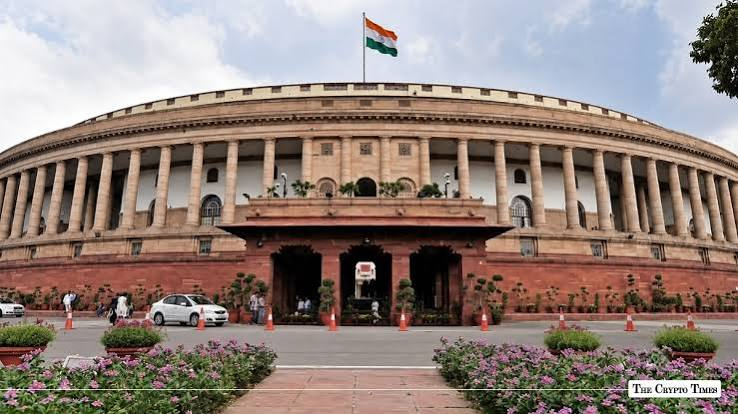
The cancellation of the Standing Committee on Finance’s hearing on virtual digital assets is a small procedural development with a larger policy implication. The committee was due to hear from the Department of Economic Affairs on its study, “A Study on Virtual Digital Assets (VDAs) and Way Forward,” but the 27 August session was cancelled for a second time. No new date has been announced.
The more important question is what comes next. India has already built a framework around taxation, anti-money laundering and enforcement, but has stopped short of establishing a comprehensive regulatory regime for crypto markets. The postponement suggests that this gap will remain for some time.
India has regulated crypto without formally defining its market
The existing framework is more substantial than the absence of a dedicated crypto law might suggest.
VDA gains are taxed at 30 percent, with only the cost of acquisition deductible, while a 1 percent TDS applies to qualifying transfers. Crypto-related entities serving Indian users must also register with the Financial Intelligence Unit and comply with anti-money laundering requirements. Enforcement agencies can intervene where activity falls under laws such as PMLA or FEMA.
This gives the government considerable visibility over the sector without formally treating crypto as a conventional financial asset class.
What remains unresolved is the market structure around it: which authority should regulate exchanges and different types of digital assets, how products such as stablecoins should be treated, and how cross-border activity should fit within India's financial controls.
Why the policy has moved slowly
Part of the difficulty lies in the different risks that institutions are trying to manage.
The RBI has repeatedly highlighted concerns around monetary policy, financial stability and capital controls. Its position makes broad formalisation difficult, particularly for privately issued cryptocurrencies that could operate outside traditional financial intermediaries.
The Department of Economic Affairs has been examining the broader policy framework, while the Standing Committee has considered whether mechanisms such as recognised self-regulatory organisations could provide an interim layer of oversight.
These approaches address different parts of the problem. The RBI is primarily concerned with systemic and monetary risks; the finance ministry and parliamentary process also have to consider taxation, consumer protection, market development and India's position as a financial and technology hub.
The missing hearing was therefore important less as a standalone event than as part of the process of reconciling these priorities.
There is a case for not rushing
A comprehensive framework would have to cover an industry that is changing rapidly. Stablecoins, tokenised assets, decentralised finance and cross-border platforms do not fit neatly into existing categories, and rules designed around today's market could quickly become outdated.
India's current approach provides a workable baseline while these questions are studied. It also avoids prematurely giving regulatory legitimacy to products whose risks remain difficult to assess.
But that approach has a limit. Taxation and AML compliance can manage existing activity; they cannot by themselves provide a market framework for businesses planning to build and operate in India over the long term.
What a useful next step would look like
The priority should therefore be to move from broad examination towards a framework that distinguishes between different types and levels of risk.
The Standing Committee can complete its study and identify areas requiring immediate intervention. The government can then publish its discussion paper and clarify where regulatory responsibilities should sit. Lower-risk activities could potentially receive clearer rules sooner, while products with greater implications for monetary or financial stability receive stronger safeguards.
That would allow India to preserve the caution that has characterised its approach without leaving the sector indefinitely in a regulatory grey area.
The cancelled hearing does not change India's existing crypto rules. Its significance is that it extends a policy process that has been underway for years. The next meaningful milestone should therefore not simply be another hearing, but a clearer indication of what regulatory architecture India ultimately intends to build.
Sources
Lok Sabha Secretariat, Standing Committee on Finance — Programme of Sitting / VDA Study
Department of Economic Affairs, Ministry of Finance, Discussion Papers on Virtual Digital Assets
Reserve Bank of India, RBI submissions on Virtual Digital Assets and associated risks
Income Tax Department, Taxation of Virtual Digital Assets
Financial Intelligence Unit–India, Guidelines for Reporting Entities in the VDA Sector
Parliamentary Standing Committee on Finance, Report on Securities Market Code, 2025


Comments