India's Regulatory Approach to Virtual Digital Assets: Recent Policy Developments
Updated: Aug 7
Nearly 39 million Indians hold about $2.1 billion in digital assets, yet the country’s policy on virtual digital assets remains deliberately ambiguous. That ambiguity is now under real pressure. In early July the Reserve Bank of India told a parliamentary panel that crypto should not be legalised and that policy should lean toward prohibition. Days later, Reuters reported internal government documents confirming the same hard line, while the tax department warned that offshore exchanges and peer-to-peer trades make tax collection almost impossible. This is not another routine warning. It is a coordinated signal that the long-running grey zone is becoming unsustainable, and the outcome looks more restrictive than enabling.

The RBI’s position is consistent and explicit. Deputy Governor Rohit Jain and Executive Director P. Vasudevan told the Standing Committee on Finance that virtual digital assets pose risks to an emerging economy, can facilitate terror funding and narcotics smuggling, and should stay outside the formal financial system. Banks and regulated institutions, the central bank insists, must be barred from holding, trading or taking any exposure to crypto or privately issued stablecoins. Regulation, in its view, would simply legitimise speculative assets and create a false sense of safety. Stablecoins draw particular concern: foreign-currency ones threaten monetary sovereignty, while rupee-backed versions could erode seigniorage and complicate tax detection.
The tax department’s numbers reinforce the case for tighter controls. Fewer than a quarter of the 645,000 people who made crypto transactions in the year ending March 2023 reported them on their returns. Offshore platforms, private wallets and rupee-denominated peer-to-peer trades leave beneficial ownership hard to trace. India already applies a 30 percent tax on gains and 1 percent TDS, and FIU-IND has registered dozens of service providers under anti-money-laundering rules. Yet compliance gaps persist, and the department has identified hundreds of crores in undisclosed income. These are not theoretical risks; they are documented shortfalls.
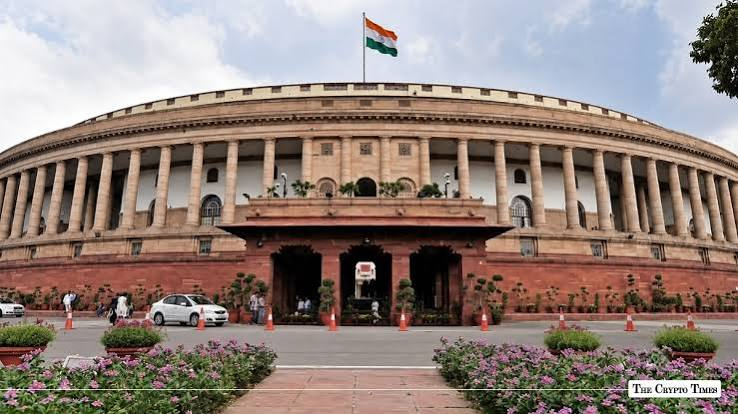
Social-media alerts and industry posts, including from India Crypto Research, correctly flagged that crypto had returned to Parliament’s agenda. The Standing Committee has held multiple sittings, heard exchanges, the RBI, ICAI and tax officials, and is preparing a report on virtual digital assets. In a separate July report on the Securities Markets Code, the panel itself noted a regulatory vacuum and recommended interim self-regulatory organisations under a designated regulator until a fuller framework exists. That is a more measured stance than outright prohibition, but it still reflects recognition that the status quo is inadequate.
Opponents of a hard ban argue that India’s large user base, tax revenue and global ranking in adoption make prohibition impractical and innovation-stifling. The 2020 Supreme Court ruling that struck down the RBI’s earlier banking restrictions shows courts will demand proportionality. Complete bans elsewhere have driven activity underground rather than eliminated it. These points have force. Yet they do not erase the concrete evidence of under-reporting, the difficulty of tracking cross-border flows, or the RBI’s mandate to protect financial stability and monetary control. Taxation without clarity has already pushed volume offshore; simply collecting more tax does not solve contagion or sovereignty concerns.
India needs a clear decision, not continued drift. The government should use the forthcoming parliamentary report to choose: either a contained, prohibition-leaning regime that keeps crypto firmly outside regulated finance, or a narrow, tightly supervised framework with strong investor protections and real enforcement tools. Prolonging the grey zone serves neither stability nor legitimate users. The documents, the panel hearings and the tax data all point in the same direction: the current arrangement is no longer tenable.
Source:
Ohri, Nikunj, Sarita Chaganti Singh, and Jaspreet Kalra. “India Central Bank Backs Crypto Ban, Tax Department Warns of Evasion Risks, Documents Show.” Reuters, July 8, 2026. https://www.reuters.com/world/india/india-central-bank-backs-crypto-ban-tax-department-warns-evasion-risks-documents-2026-07-08/.
“RBI Backs Crypto Containment and Keeps Ban on Table, Officials Tell House Panel.” The Economic Times, July 3, 2026. https://economictimes.indiatimes.com/news/economy/policy/rbi-backs-crypto-containment-and-keeps-ban-on-table-officials-tell-house-panel/articleshow/132146681.cms.
Gandhi, Swati. “RBI Says VDAs, Including Cryptocurrency, Pose Threat to Emerging Economies like India, Opposes Its Legalisation.” Mint, July 3, 2026. https://www.livemint.com/economy/rbi-says-vdas-including-cryptocurrency-poses-threat-to-emerging-economies-like-india-opposes-its-legalisation-11783058298797.html.
“India Crypto Ban: RBI Backs Prohibition, Tax Department Flags Evasion Risks.” CryptoTimes, July 8, 2026. https://www.cryptotimes.io/2026/07/08/india-crypto-ban-rbi-backs-prohibition-tax-department-flags-evasion-risks/.
“Reserve Bank of India Still Favors Crypto Prohibition amid Tax Evasion Fears.” CoinDesk, July 8, 2026. https://www.coindesk.com/policy/2026/07/08/reserve-bank-of-india-still-favors-crypto-prohibition-to-curtail-tax-evasion-reuters.
“Parliamentary Committee Seeks Comprehensive Law to Regulate Cryptocurrencies in India.” Swarajya, July 24, 2026. https://swarajyamag.com/news-brief/parliamentary-committee-seeks-comprehensive-law-to-regulate-cryptocurrencies-in-india.
“India Panel Seeks Clear VDA Rules, Recommends Crypto SROs.” CryptoTimes, July 23–24, 2026. https://www.cryptotimes.io/2026/07/24/india-panel-seeks-clear-vda-rules-recommends-crypto-sros/.
“RBI Backs Crypto Ban, Tax Department Cites Tracking and Tax Risks.” India Today, July 8, 2026. https://www.indiatoday.in/business/story/rbi-backs-crypto-ban-again-tax-department-cites-tracking-and-tax-risks-report-2943207-2026-07-08.


Comments